- Established
- 1973
- Area
- Around 344 sq km
- Ranges
- Muthanga (east) and Tholpetty (north)
- Part of
- Nilgiri Biosphere Reserve, contiguous with Nagarhole and Bandipur
- Key species
- Asian elephant, gaur, tiger, leopard, spotted deer
- Safari duration
- About 1.5 to 2 hours per slot
- Closed
- Wednesdays, both ranges
- Distance from Jungle Edge
- Tholpetty range about 30 minutes, Muthanga range about 1 hour
Wayanad Wildlife Sanctuary is best understood not as a single park but as the Kerala portion of a much larger forest system that runs unbroken into Karnataka's Nagarhole and Tamil Nadu's Bandipur reserves. Together these form one of the largest contiguous elephant habitats left in southern India, and the Wayanad section, though comparatively small, plays an outsized role as the connecting corridor between them.
The sanctuary is split administratively and, for visitors, practically into two ranges that operate independently: Muthanga in the east, close to the Karnataka border near Sultan Bathery, and Tholpetty in the north, near Mananthavady. Each has its own gate, its own safari timings and a noticeably different character, which is why we cover them separately in more depth elsewhere on this site.
This overview is meant to orient first-time visitors deciding which range suits their base and their appetite for driving, before diving into either the safari-heavy detail of Muthanga or the quieter northern pace of Tholpetty.
History
The sanctuary was declared in 1973, relatively early in India's wildlife protection timeline, in recognition of its role as an elephant corridor rather than for any single charismatic species. Its boundaries were drawn to link with the neighbouring reserves rather than stand alone, a deliberate piece of landscape-scale planning that was ahead of its time.
Over the following decades, as agriculture and settlement expanded around its edges, human-elephant conflict became one of the defining management challenges here, and much of the sanctuary's current infrastructure, from watchtowers to solar fencing on the periphery, reflects decades of adaptation to that pressure rather than tourism alone.
Highlights
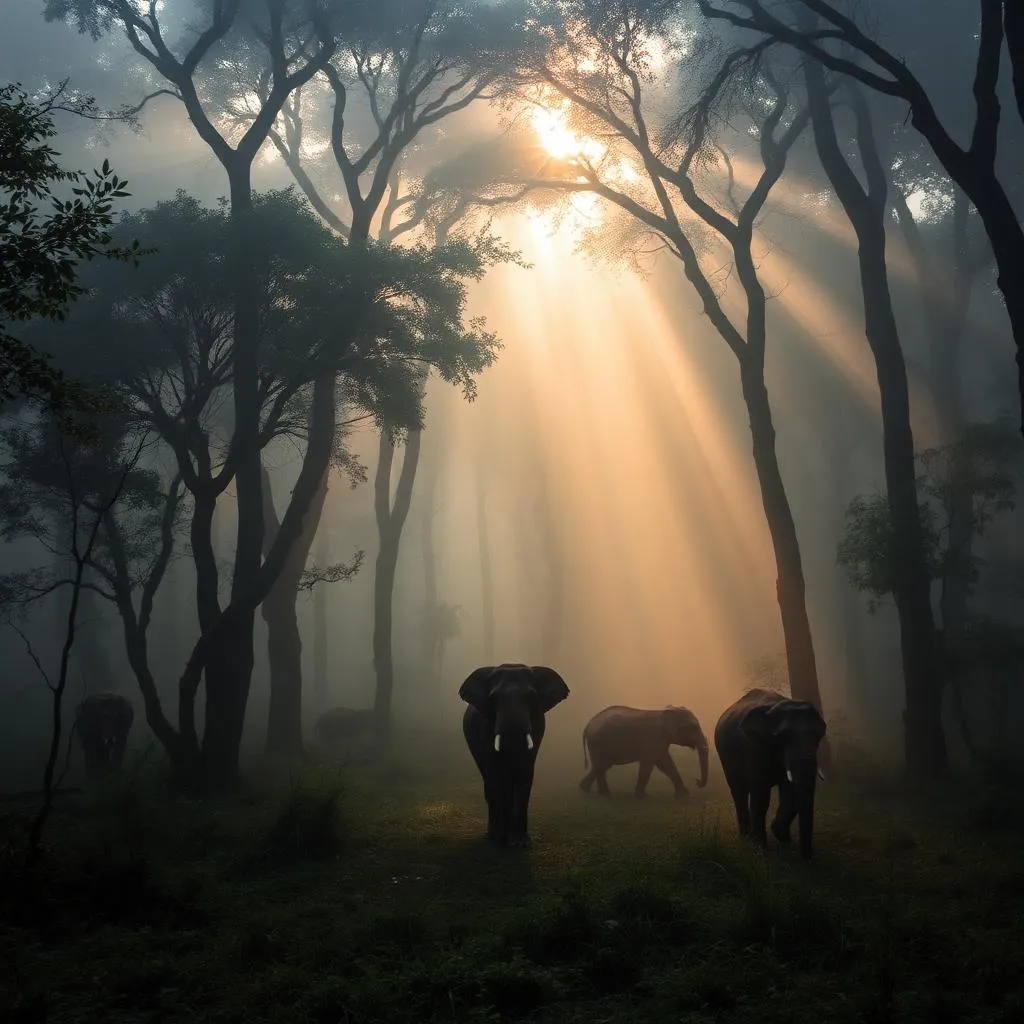
Elephants are the sanctuary's signature sighting, often in family herds of a dozen or more moving through the grasslands at dawn or dusk. Gaur, the enormous Indian bison, are also commonly seen, along with spotted deer, sambar and, less predictably, leopard and the occasional tiger, whose presence is confirmed regularly by camera trap data even when direct sightings remain rare.
Birdlife across both ranges is substantial, with the sanctuary recording species from Malabar trogons to great hornbills, particularly along the denser forest stretches bordering the grassland. The bamboo and teak mix through much of the terrain also supports a healthy population of langurs and macaques, frequently visible from the safari track.
The real subject of Wayanad Wildlife Sanctuary is not any single animal but the corridor itself, a reminder that Kerala's forests do not end at the state border.
Timings
- Both ranges closed on Wednesdays
- Morning safari slots typically 7:00 am to 9:00 am
- Afternoon safari slots typically 3:00 pm to 5:00 pm
- Gates and booking counters open roughly half an hour before the first slot
Entry Fee
- Jeep safari charges are typically quoted per vehicle, seating around six visitors, at the time of writing in the low thousands of rupees; confirm locally as rates change seasonally
- A basic sanctuary entry fee applies in addition to the safari vehicle charge
- Camera charges may apply separately for professional equipment
- Advance booking is strongly recommended in peak season through the forest department counter or approved operators
Best Time to Visit
November to April offers the most reliable sightings, as drier conditions push animals towards remaining water sources and open grassland, improving visibility from the safari track. Early morning slots consistently outperform afternoon ones for both elephant and bird activity.
Monsoon months, roughly June to September, see safaris reduced or occasionally suspended depending on rainfall and track conditions, and the dense undergrowth makes sightings harder regardless of animal activity levels.
Photography Tips
A telephoto lens in the 200 to 400mm range covers most sanctuary sightings well, since safari vehicles keep a respectful and mandated distance from elephants in particular. Shoot from a stable brace against the vehicle frame rather than handheld at full extension, given the uneven forest tracks.
Morning light through the grassland mist is the most reliable payoff for early starts, arriving well before sightings become likely.
Nearby Attractions
- Muthanga range gate near Sultan Bathery for a dedicated safari visit
- Tholpetty range gate near Mananthavady, the closer option from our resort
- Kuruvadweep river island for a contrasting, walkable forest experience
- Edakkal Caves and Sultan Bathery town for a full day combining history and wildlife
Travel Tips
- Book safari slots in advance during weekends and holiday periods, as vehicles fill quickly
- Wear muted colours and avoid strong scents or perfumes on safari
- Keep noise to a minimum inside the vehicle, particularly near suspected elephant activity
- Carry water and a light jacket for early morning slots, which can be cool even in a warm season
Staying Nearby
Guests at Jungle Edge in Thalapuzha, Mananthavady, are naturally closer to the Tholpetty range, roughly thirty minutes away, which makes an early morning safari there realistic without an unreasonably early wake-up call. Muthanga, on the far side of the district near Sultan Bathery, takes closer to an hour and works best as part of a longer day that also covers Edakkal Caves or Sultan Bathery town.
Our team can help time transport around whichever safari slot you book, since arriving even ten minutes late at either gate can mean losing the vehicle allocation for that session.
Find it on the map
Get directionsFrequently asked
Related guides
Plan the rest of your stay
Balcony rooms, single, twin and premium cottages
Nature walks, campfires, pool evenings
The full hub of attractions, seasons and itineraries
The Jungle Edge journal
Why guests choose Jungle Edge
A stay surrounded by forest and hills
Cottages and activities for every age
Drive times, airports and directions
From the journal
Plan your safari from a base near both ranges
Stay at Jungle Edge and reach Tholpetty in half an hour, with Muthanga an easy morning drive away.
Thalapuzha, Kanyamoola, Valad (PO), Mananthavady, Wayanad