What sets this stay apart
Sanctuary-edge location
The Tholpetty range of the Wildlife Sanctuary sits minutes away — one of only a handful of resorts this close.
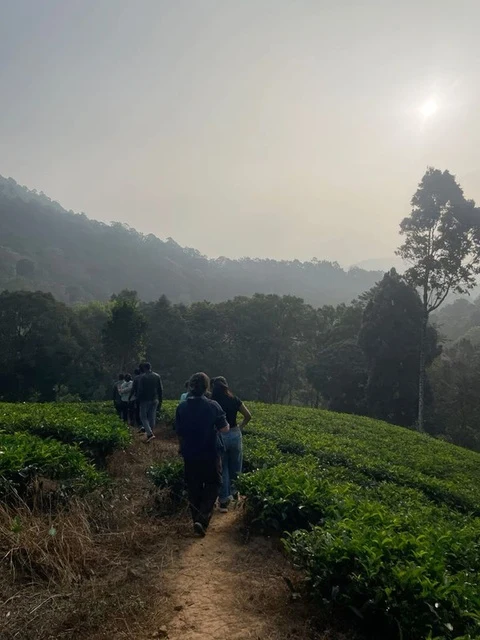
Naturalist-led walks
Morning trails with a resident naturalist explain what you're looking at — trees, calls, tracks, seasonal shifts.
Bird-rich landscape
The Kabini basin is home to hornbills, drongos, kingfishers, minivets and dozens of migratory species in season.
Low-impact design
No amplified sound, no bright compound lighting, minimal cement footprint — the resort keeps the nocturnal wildlife undisturbed.
Planning this trip? Jungle Edge is a short drive into the Wayanad hills — see our forest-view cottages before you book.
What 'nature resort' really means, and doesn't
The term gets used loosely. Many properties advertise themselves as nature resorts while sitting on flat land with a few trees and a swimming pool. A real nature resort earns the label through its location — proximity to protected forest — and through the way it operates: minimal light pollution, no loud music, sensitive waste handling, and staff who can actually name what's living in the trees.
Jungle Edge is built along these lines. It's the reason wildlife shows up so regularly, and the reason guests who come for a rest end up leaving with a small notebook of species and behaviours they've noticed.
A day in the forest, resort-side
Mornings start with tea on the balcony and the guided nature walk at 7 AM. By mid-morning you're back for a slow breakfast. Afternoons are quiet — the pool, a hammock, a book. In the golden hour, a longer trail or a drive along the sanctuary boundary. Nights are for the campfire; the stars in this pocket of Wayanad are startlingly bright.
Serious wildlife days start earlier — a 5:45 AM safari at Tholpetty gate, packed breakfast in the car, back to the resort by 10.
How we minimise our footprint
The resort uses solar heating, low-wattage warm lighting on motion sensors, and a boundary of native trees that shelter both cottages and the buffer forest. Housekeeping uses low-fragrance, biodegradable products; kitchen waste is composted on-site and used in the vegetable patch.
None of this is marketing polish — a nature resort that behaves otherwise slowly kills the very thing it sells.
The nature you'll encounter, month by month
Wayanad's ecosystems shift dramatically with the monsoon cycle. A nature stay in October reveals a different set of species and behaviours than one in February or June.
- October–February
- Peak birding, clear skies, post-monsoon greenery
- March–May
- Wildlife concentrates near water — best for large mammals
- June–September
- Full monsoon — dramatic waterfalls, lush forest, leech precautions
- Nearest sanctuary gate
- Tholpetty — ~25 min drive
- Nearest river island
- Kuruva Island — ~35 min drive
- Nearby birding hotspot
- Pakshipathalam trek and Brahmagiri foothills
Explore more of Jungle Edge
Balcony rooms, cottages and premium suites
Nature walks, campfires and curated excursions
Journal entries from the resort
Attractions, seasons and itineraries
A local's guide to the region
Why Jungle Edge tops the shortlist
Romantic stays for couples
Airports, drive times and directions
Frequently asked
Book a nature stay at Jungle Edge
Tell us what you'd like to see — birds, big mammals, herpetology, or just forest quiet — and we'll shape the walks, drives and safari calendar around it.
Thalapuzha, Kanyamoola, Valad (PO), Mananthavady, Wayanad