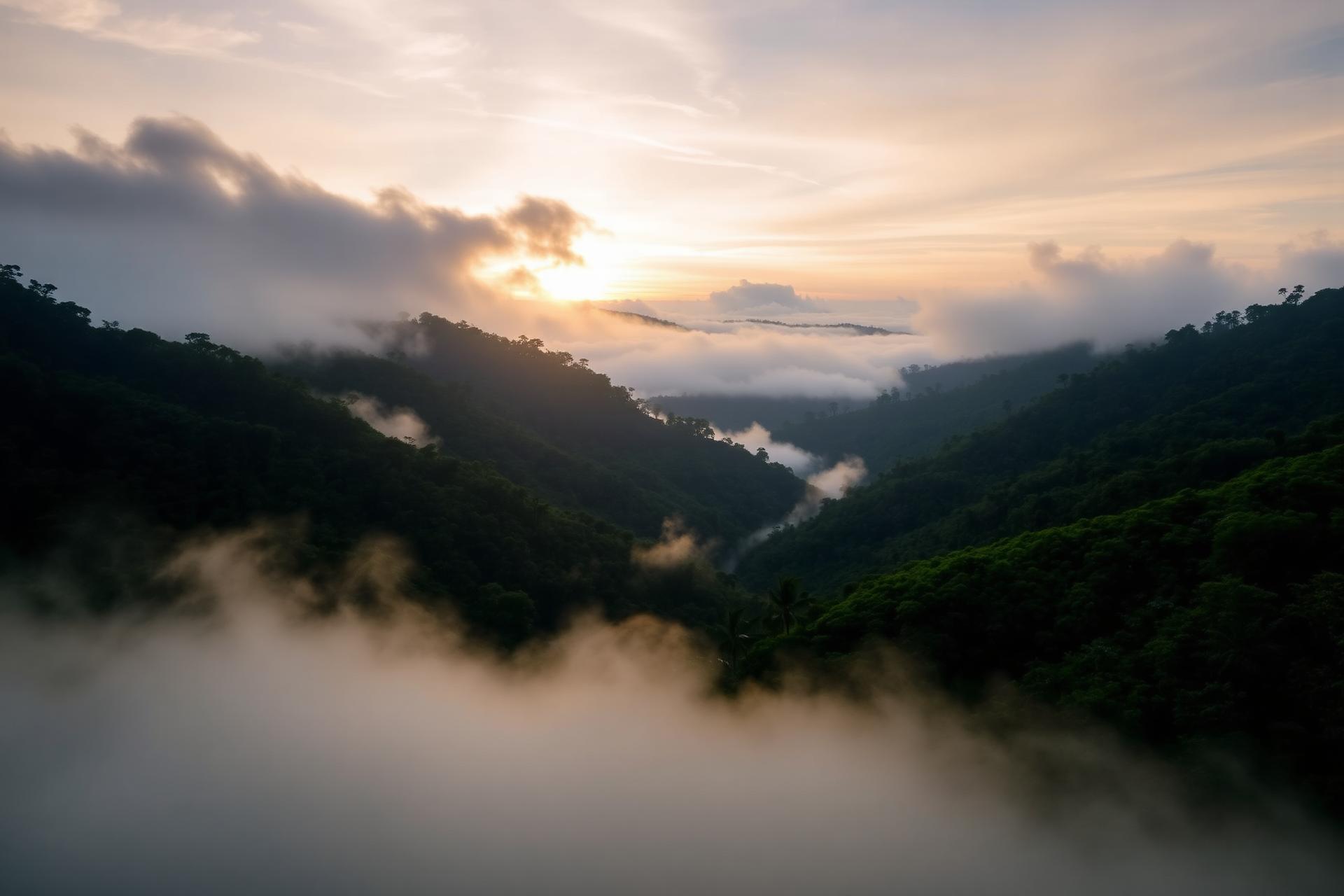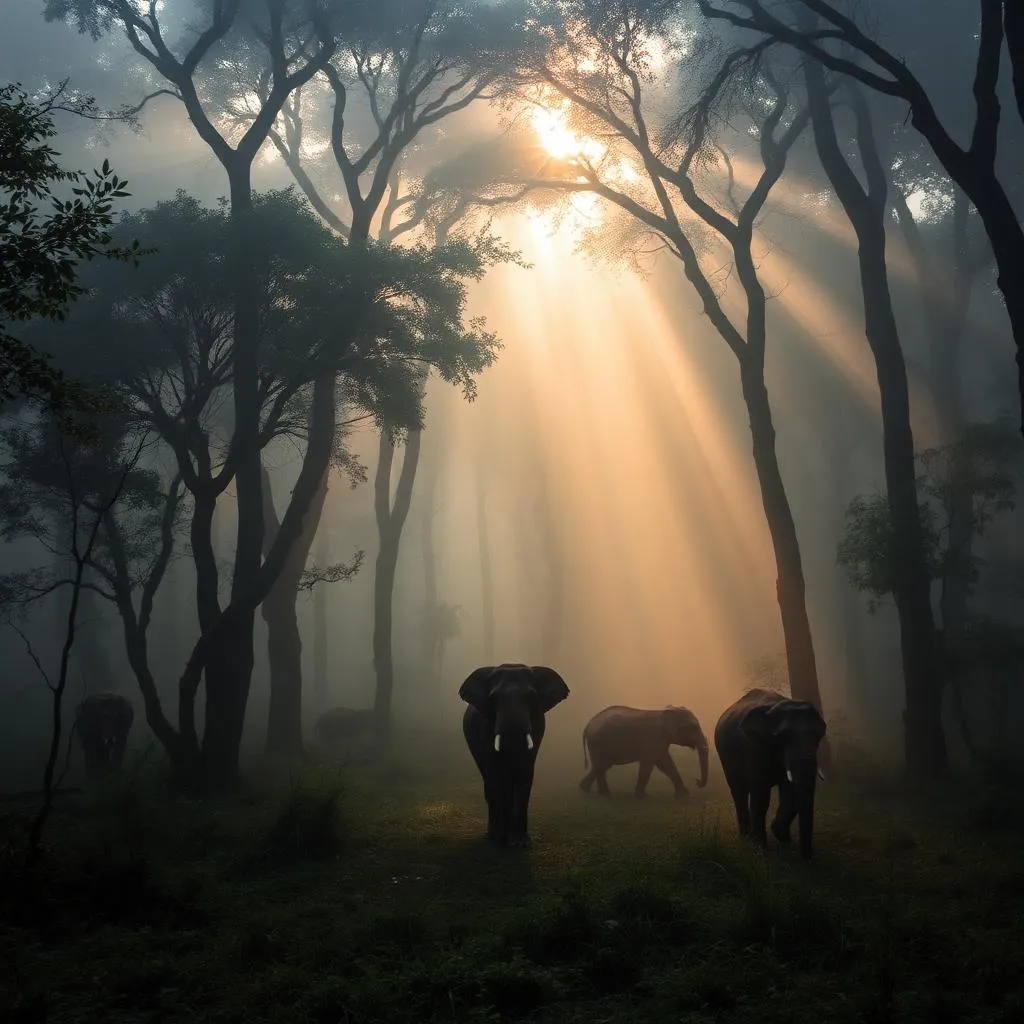
Wayanad Wildlife Sanctuary, contiguous with Nagarhole and Bandipur across the state borders, forms part of one of the largest protected forest tracts in South India. For photographers, this means genuine encounters with elephant herds, gaur, spotted deer, and, with considerable patience, tiger and leopard — but it also means working within a forest department system designed around conservation, not photography convenience.
Choosing your range
Muthanga range, near Sultan Bathery, is the more heavily visited entry point and can feel crowded with jeeps during peak season. Tholpetty range, in the north near Mananthavady, sees fewer vehicles per safari slot and borders forest that stays genuinely wild well beyond the tourist track — most photographers who know the district well now prefer it. Staying at Jungle Edge Resort in Thalapuzha puts you a short drive from the Tholpetty gate, useful for making the mandatory early morning slot without a pre-dawn drive.
Timing your safari
Morning safaris typically run from around 6.30 to 9.30am, and evening slots from 3 to 5.30pm. Morning light is softer and animal activity higher, particularly for elephant and gaur grazing before the day heats up. December to March offers the driest conditions and best visibility, since dense monsoon foliage from June to September, while beautiful, makes sightings harder and closes some safari routes altogether.
The best wildlife photograph in Wayanad is usually the one you did not disturb the animal to get.
Gear that actually helps
A telephoto lens in the 300–600mm range is the single most useful piece of equipment, since safari jeeps keep a respectful distance from animals and forest department rules prohibit approaching wildlife closely. A monopod copes better than a tripod with the cramped space and constant repositioning inside a shared jeep. Fast shutter speeds matter more than wide apertures here, since even in dense canopy you are often photographing moving subjects in dappled, high-contrast light.
Birdlife beyond the big mammals
Wayanad's birdlife is arguably its most photographable resource and the least competed for. Malabar grey hornbills, racket-tailed drongos, Indian pittas and a long list of Western Ghats endemics can be found in the shaded coffee estates and forest fringes without needing a safari permit at all — a quiet early morning walk around a plantation near Meppadi or Ambalavayal, or even the tree line around a forest-edge property, often produces better bird photography than a jeep safari does.
Ethics and etiquette
Flash photography is prohibited and genuinely harmful to nocturnal and low-light species. Never ask a guide or driver to get closer than the vehicle naturally would for a photograph — elephant encounters in particular have turned dangerous in Wayanad when jeeps have pushed too close. Resist the urge to bait or call animals, and remember that a sanctuary is first and foremost a home, not a studio.
Beyond the sanctuary boundary
Some of the most memorable wildlife photography in the district happens entirely outside protected areas — a herd crossing a plantation road at dusk, a Malabar giant squirrel in the canopy above a forest lodge, langurs moving through trees at first light. Properties bordering reserve forest, such as Jungle Edge, often deliver these moments unplanned, which is part of why guests are advised to keep a camera within reach even at breakfast.