Coffee arrived in Wayanad in the mid-1800s, brought by British planters who found the district's elevation, rainfall and volcanic soil close to ideal. Today Wayanad accounts for the majority of Kerala's coffee production, almost all of it robusta, grown in the shade of silver oak and rosewood across estates that blur the line between agriculture and forest.
Why shade-grown matters
Unlike the sun-exposed coffee monocultures found elsewhere, Wayanad's estates are largely shade-grown, interplanted with pepper vines climbing the same silver oak trees, and often bordered by patches of natural forest. This matters beyond the taste of the coffee itself — shade-grown systems support far more birdlife and biodiversity, and walking through one, you are as likely to hear a Malabar whistling thrush as you are a generator.
Where to visit
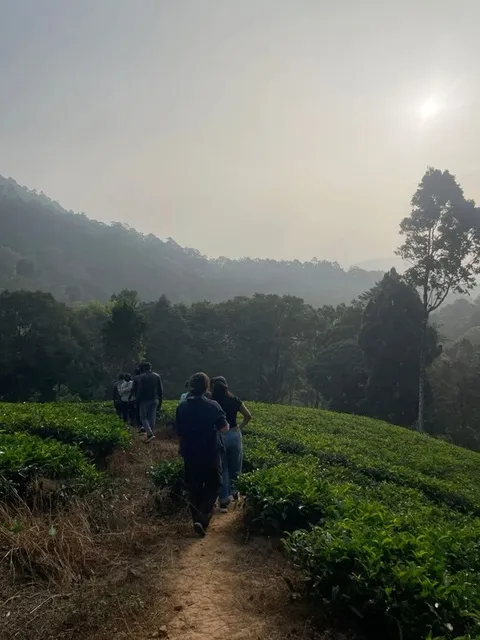
Estates around Ambalavayal, Meppadi and Chundale offer guided plantation walks, typically ninety minutes to two hours, where a local guide will explain the coffee cycle from flowering (a brief, fragrant white bloom usually in February–March, triggered by the first pre-monsoon showers) through to harvest between November and January. Many combine the walk with a stop to see pepper, cardamom and vanilla growing alongside the coffee, since diversified cropping is standard practice here.
A coffee estate in Wayanad is really a forest that has learned to also grow coffee.
Robusta versus arabica
Wayanad's lower and mid elevations suit robusta, which is hardier and higher-yielding, though pockets of arabica grow at higher altitudes near Chembra and Meppadi where the cooler nights suit it better. Robusta has a reputation for bitterness, largely from mass-market instant coffee, but properly processed estate robusta, roasted with a light hand, is considerably more complex than that reputation suggests.
Processing and roasting
Most smallholders in Wayanad use the dry (natural) process, sun-drying the whole coffee cherry on raised beds or concrete yards before hulling, which gives the coffee a heavier body and slightly fruity edge. Some estates now experiment with washed processing for a cleaner cup. Small home-roasting operations near Ambalavayal sell coffee roasted within days of grinding, a different experience entirely from supermarket packets that may have sat on a shelf for months.
The best time to visit
December through February gives you both the tail end of harvest activity and pleasant walking weather. Visiting during the February–March flowering, if timed right after rain, rewards you with entire hillsides turned briefly white with blossom, and an unmistakable jasmine-like scent hanging over the estate.
Bringing coffee culture back to your stay
Several resorts in the district, including Jungle Edge in Thalapuzha, source their filter coffee directly from nearby estates rather than commercial brands, and staff are usually happy to point guests toward smallholder plantations for a walk that feels like a conversation with a farmer rather than a scripted tour. Buying coffee directly from an estate, rather than a roadside souvenir shop, also means more of what you pay reaches the people who grew it.